Poco
Poco - 'Head Over Heels' (1975) + 'Rose Of Cimarron' (1976) 2 LP in 1 CD, Remastered 2011 Music
Posted by Designol at Oct. 7, 2026

Poco - 'Head Over Heels' (1975) + 'Rose Of Cimarron' (1976)
2 LP in 1 CD, Remastered 2011
EAC | FLAC | Image (Cue&Log) ~ 442 Mb | Mp3 (CBR320) ~ 167 Mb | Scans ~ 74 Mb
Country-Rock, Country, Pop Rock, Roots Rock | Label: BGO | # BGOCD 1003 | 01:12:50
2 LP in 1 CD, Remastered 2011
EAC | FLAC | Image (Cue&Log) ~ 442 Mb | Mp3 (CBR320) ~ 167 Mb | Scans ~ 74 Mb
Country-Rock, Country, Pop Rock, Roots Rock | Label: BGO | # BGOCD 1003 | 01:12:50
The song "Keep on Tryin'" from Head Over Heels kicks off this two-fer of Poco albums (released in 1975 and 1976) and is a reasonable metaphor for the band's continued desire to break into the mainstream and enlarge what had been an appreciative but somewhat minor cult following. The quartet also relocated from the Epic label which had been home since their 1970 debut, to ABC (later MCA). With the business change came a burst of creativity, as the strong voices and songwriting skills of the Tim Schmit-Rusty Young-Paul Cotton creative nucleus dovetailed for a terrific set, shifting to a slightly more pop vein, while remaining firmly ensconced in the country, folk, and even bluegrass roots of their previous output. A cover of the rare Becker/Fagen composition "Dallas" (available only as a single before Steely Dan's full-length debut but not included on it) is an inspired choice. Paul Cotton blossomed as a songwriter with "Let Me Turn Back to You," a warm-up of sorts for "Heart of the Night," the track that three years later would ultimately provide the crossover hit they were searching for.
Poco - Pickin' Up The Pieces / Poco (2004) {Remastered} Music
Posted by popsakov at Aug. 27, 2026

Poco - Pickin' Up The Pieces / Poco (2004) {Remastered}
2CD |EAC Rip | FLAC (Tracks) + Cue + m3u8 + Log ~ 553 Mb | MP3 CBR320 ~ 196 Mb
Full Scans ~ 87 Mb | 00:40:11 + 00:41:04 |RAR 5% Recovery
Country Rock, Soft Rock, Pop Rock | BGO Records #BGOCD612
2CD |EAC Rip | FLAC (Tracks) + Cue + m3u8 + Log ~ 553 Mb | MP3 CBR320 ~ 196 Mb
Full Scans ~ 87 Mb | 00:40:11 + 00:41:04 |RAR 5% Recovery
Country Rock, Soft Rock, Pop Rock | BGO Records #BGOCD612
Of all the pioneering country-rock bands of the late '60s, Poco may well have been the one that got the hybrid the most right, at least initially. The group's high-energy, joyous, and infectious songs had none of the artfulness of the Byrds' attempt at fusing rock and country, and none of the cache of hipness that weighed down both the Eagles and the Flying Burrito Brothers. Poco just played and had fun in an unassuming way, at least at the outset, because latter-era Poco is every bit as laden with California cool as the above named bands. This release from England's Beat Goes On Records combines Poco's first two albums in a two-disc set, and it is an inspired (and obvious) pairing, catching the band at its freshest peak in the studio.
Yehudi Menuhin - Les Introuvables de Yehudi Menuhin [5CD Box Set] (2000) Music
Posted by Mocha at Oct. 6, 2026
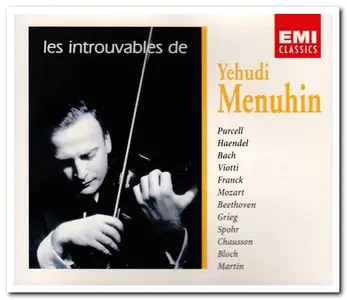
Yehudi Menuhin - Les Introuvables de Yehudi Menuhin (5CD) (2000)
Label: EMI Classics [5 73819 2] | FLAC (tracks + .cue, log, scans) / MP3 320 kbps | 05:31:17 | 1.37 GB / 762 MB | 51 tracks
Genre: Classical, Chamber Music, Violin, Baroque, Romantic
Label: EMI Classics [5 73819 2] | FLAC (tracks + .cue, log, scans) / MP3 320 kbps | 05:31:17 | 1.37 GB / 762 MB | 51 tracks
Genre: Classical, Chamber Music, Violin, Baroque, Romantic
Released in 2000 as part of EMI Classics' revered "Les Introuvables" series, this comprehensive 5-CD box set gathers rare, hard-to-find chamber music recordings by violin icon Yehudi Menuhin. Spanning Baroque masterpieces by Purcell, Handel, and Bach (including the famed Double Violin Concerto) to Romantic chamber milestones by Franck, Mozart, Beethoven, Grieg, and Chausson, this collection highlights Menuhin's artistic versatility and expressive depth. Featuring collaborations with his sister, pianist Hephzibah Menuhin, alongside violinists David Oistrakh and George Enescu, cellist Maurice Gendron, and conductor Frank Martin, this set stands as an essential document for violin aficionados and classical archive collectors.
Orchestre Consuelo & Victor Julien-Laferrière - Beethoven: Symphonies No. 3 & 7 (Intégrale des symphonies, Vol. 3) (Live) (202 Music
Posted by Fizzpop at Oct. 7, 2026
Orchestre Consuelo & Victor Julien-Laferrière - Beethoven: Symphonies No. 3 & 7 (Intégrale des symphonies, Vol. 3) (Live) (2026)
WEB FLAC (Tracks +Booklet) 363 MB | Cover | 01:24:44 | MP3 CBR 320 kbps | 196 MB
Classical | Label: B Records
WEB FLAC (Tracks +Booklet) 363 MB | Cover | 01:24:44 | MP3 CBR 320 kbps | 196 MB
Classical | Label: B Records
Victor Julien-Laferrière and Consuelo continue their complete recording of Ludwig van Beethoven’s symphonies with a triumphant double bill: the ‘Eroica’ Symphony, a grand epic that has left its mark on the history of music, and the whirlwind Seventh, which Richard Wagner would go on to describe as ‘the apotheosis of dance’.
Café del mundo - GuitaRize the World - Best of Café del Mundo (2026) Music
Posted by ciklon5 at Oct. 8, 2026

Café del mundo - GuitaRize the World - Best of Café del Mundo (2026)
FLAC (tracks), Lossless | 1:18:09 | 435 Mb
Genre: Classical
FLAC (tracks), Lossless | 1:18:09 | 435 Mb
Genre: Classical
Café del Mundo is a German musical group formed in 2007 by guitarists Jan Pascal and Alexander Kilian. The duo met during a Flamenco guitar workshop at the Buchener Gitarrentage. Café del Mundo released their album La Perla in 2014, followed by Dance of Joy (2015). They signed with GLM Music and performed as an opening act for Lang Lang at Jazz Open Stuttgart in 2013. Their subsequent albums include …In Passion Live at Theaterhaus Stuttgart (2015) and Famous Tracks (2019), recorded at Abbey Road Studios, London. In 2023, they collaborated with the Royal Philharmonic Orchestra for the album Symphonic, also recorded at Abbey Road Studios. Their cover of "Una Mattina" went viral on Instagram and TikTok in 2023.
Jan De Winne, Ira Givol & Stanislav Gres - Charles Weidemann: Flute Sonatas (2026) Music
Posted by ciklon5 at Oct. 8, 2026
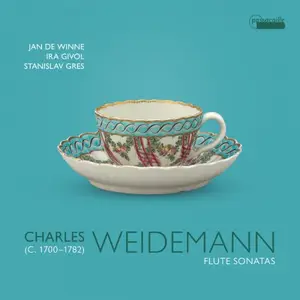
Jan De Winne, Ira Givol & Stanislav Gres - Charles Weidemann: Flute Sonatas (2026)
FLAC (tracks), Lossless | 1:20:25 | 413 Mb
Genre: Classical
FLAC (tracks), Lossless | 1:20:25 | 413 Mb
Genre: Classical
Handel’s flautist. The first port of call for every aristocrat who wished to master the German flute. A founding father of the Royal Society of Musicians. Charles Weidemann was everywhere in Georgian London — and almost nowhere in the history books. These twelve flute sonatas, composed at the height of a blooming career, reveal why he deserves better. Graceful, inventive, and reflecting his virtuosity, they are the rediscovery of the season.
Suisse Romande, Ernest Ansermet - Igor Stravinsky: Ballets, Stage Works, Orchestral Works (2001) 8CD Box Set Music
Posted by Designol at Oct. 8, 2026

Igor Stravinsky: Ballets, Stage Works, Orchestral Works (2001) 8CD Box Set
L'Orchestre de la Suisse Romande; Ernest Ansermet, conductor
EAC | FLAC | Image (Cue&Log) ~ 2.25 Gb | Scans included
Genre: Classical | Label: Decca | # 467 818-2 | Time: 08:27:52
L'Orchestre de la Suisse Romande; Ernest Ansermet, conductor
EAC | FLAC | Image (Cue&Log) ~ 2.25 Gb | Scans included
Genre: Classical | Label: Decca | # 467 818-2 | Time: 08:27:52
All the Stravinsky recordings made by Ernest Ansermet and The Suisse Romande Orchestra, digitally remastered in an 8 CD box. The set includes all Stravinsky's major orchestral works at a bargain price in highly respected recordings dating from the late 50's and early 60's.
La Serenissima & Adrian Chandler - Hell's Angels (2026) Music
Posted by delpotro at Oct. 6, 2026
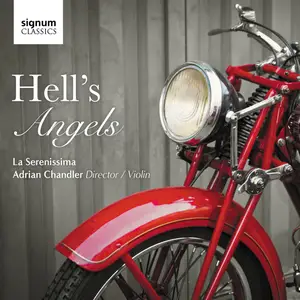
La Serenissima & Adrian Chandler - Hell's Angels (2026)
WEB FLAC (tracks) - 490 Mb | MP3 CBR 320 kbps - 187 Mb | Digital booklet | 01:20:27
Classical | Label: Signum Classics
WEB FLAC (tracks) - 490 Mb | MP3 CBR 320 kbps - 187 Mb | Digital booklet | 01:20:27
Classical | Label: Signum Classics
Taking its title from a legendary 1728 encounter between violinists Pietro Locatelli and Jean-Marie Leclair, whose contrasting styles were memorably described as angelic and diabolical, Hell’s Angels traces the cross-pollination of French and Italian baroque technique through sonatas by Vivaldi, Leclair, Guillemain, Marcello and Mascitti. At the heart of the programme is Vivaldi’s rarely heard early Sonata RV 820, its final movement completed by Adrian Chandler following the loss of the original manuscript. Two-time Gramophone Award winners La Serenissima bring their characteristic authority to over 80 minutes of music spanning some of the most demanding chamber writing of the period.
Lahti Symphony Orchestra, Osmo Vanska - Sibelius: The Complete Symphonies [4CD Box Set] (2001) Music
Posted by Mocha at Oct. 7, 2026
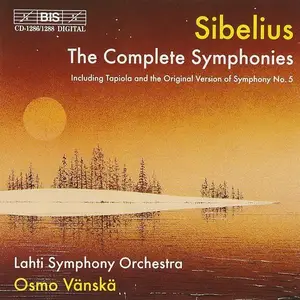
Lahti Symphony Orchestra, Osmo Vänskä - Sibelius: The Complete Symphonies (4 CD Box Set) (2001)
Label: BIS | FLAC (tracks+.cue, log, scans) / MP3-320 kbps | 04:47:48 | 1.01 GB / 689 MB | 31 tracks
Genre: Classical, Romantic
Label: BIS | FLAC (tracks+.cue, log, scans) / MP3-320 kbps | 04:47:48 | 1.01 GB / 689 MB | 31 tracks
Genre: Classical, Romantic
"This Lahti Sibelius cycle is healthy and extremely well recorded. The sense of front to back perspective and of quiet details in the foreground registering despite fff activity above is remarkable and a tribute to Ingo Petry, Robert Suff, Jeffrey Ginn and Jens Braun.
The set is sui generis in that it gives both versions of the Fifth Symphony… It is fascinating to hear the Fifth in its four movement 1915 issue playing 35:16 against the 3 movement 31:20 final version of 1919. After so many years of hearing the Fifth in the tighter 3 movement structure it is impossible to make a reliable snap appraisal. All I can do is to celebrate the chance to hear what amounts to a new Sibelius work… Vänskä knows his way to the elusive realm between gestural defiance and grateful descant." — Rob Barnett
Trio 1790 - Kozeluch: Piano Trios Vol. 5 (2026) Music
Posted by ciklon5 at Oct. 7, 2026
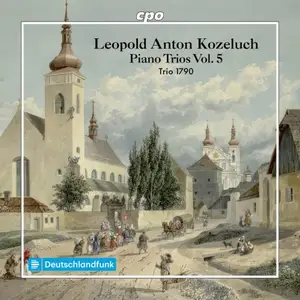
Trio 1790 - Kozeluch: Piano Trios Vol. 5 (2026)
FLAC (tracks), Lossless +Booklet | 1:02:26 | 286 Mb
Genre: Classical
FLAC (tracks), Lossless +Booklet | 1:02:26 | 286 Mb
Genre: Classical
Insgesamt hat der böhmische Wiener Leopold Koželuch rund fünf Dutzend Sonaten oder Trios für Klavier, Violine und Violoncello veröffentlicht – eine erkleckliche Menge, mit der er einfallsreich und geschickt die aktuellen Modetrends bediente, ohne dabei in jene Leichtfertigkeiten zu verfallen, die selbst in den damaligen Kreisen der gehobenen Hausmusik nach einmaligem Durchspielen beiseitegelegt wurde. Das Trio 1790 hat im Laufe der letzten Jahre rund ein Viertel dieser durchweg entzückenden, teils dramatisch zugespitzten, teils folkloristisch angereicherten Piecen ausgewählt, für cpo mit außergewöhnlich feiner Nuancierungskunst eingespielt und jetzt mit der fünften Folge den Abschluss der kleinen Serie erreicht, der man es anmerkt, dass sie nie als enzyklopädischer Durchmarsch gedacht war: Jede der drei erlesenen »Sonates en trio« ist eine Preziose von eigener Art und als solche ein funkelndes Vergnügen, das wir gewiss nicht nach einmaligem Durchhören beiseitelegen werden.