is Ought
Until the Last Yoke Is Broken: The Constitutional Vision of Frederick Douglass eBooks & eLearning
Posted by First1 at Sept. 30, 2026
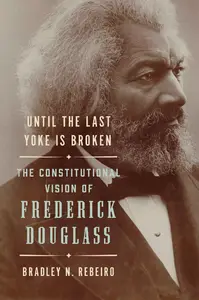
Until the Last Yoke Is Broken: The Constitutional Vision of Frederick Douglass (Texts and Translations of Transcendence and Transformation) by Bradley N. Rebeiro
English | September 29th, 2026 | ISBN: 0674301684 | 360 pages | True EPUB | 1.11 MB
English | September 29th, 2026 | ISBN: 0674301684 | 360 pages | True EPUB | 1.11 MB
A groundbreaking analysis of Frederick Douglass as constitutional theorist, showing how his vision, which prefigured today's originalism, melded history and natural rights to address the evil of slavery.
Bella Darcy is on the Run: The Disobedient Daughters of Darcy (Book 1) eBooks & eLearning
Posted by insetes at Sept. 25, 2026
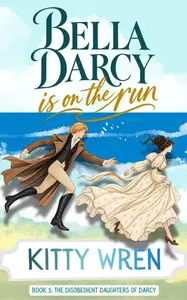
Bella Darcy is on the Run: The Disobedient Daughters of Darcy (Book 1) By Kitty Wren
2026 | 256 Pages | ISBN: 8176702315 | EPUB | 1 MB
2026 | 256 Pages | ISBN: 8176702315 | EPUB | 1 MB
Moral Philosophy eBooks & eLearning
Posted by lucky_aut at July 8, 2026

Moral Philosophy
MP4 | Video: h264, 1920x1080 | Audio: AAC, 44.1 KHz, 2 Ch
Genre: eLearning | Language: English (US) | Duration: 1.5 h | Size: 1.32 GB
MP4 | Video: h264, 1920x1080 | Audio: AAC, 44.1 KHz, 2 Ch
Genre: eLearning | Language: English (US) | Duration: 1.5 h | Size: 1.32 GB
A Survey of Ethics from Ancient to Modern Times
Louis Armstrong & Duke Ellington - The Complete Louis Armstrong & Duke Ellington Sessions, 1961 (1990) Music
Posted by Designol at Oct. 7, 2026

Louis Armstrong & Duke Ellington - The Complete Sessions, 1961 (1990)
EAC | FLAC | Tracks (Cue&Log) ~ 317 Mb | Mp3 (CBR320) ~ 163 Mb | Scans included
Swing, Vocal Jazz, Mainstream Jazz | Roulette Jazz/Capitol | # CDP 593844 | 01:08:27
EAC | FLAC | Tracks (Cue&Log) ~ 317 Mb | Mp3 (CBR320) ~ 163 Mb | Scans included
Swing, Vocal Jazz, Mainstream Jazz | Roulette Jazz/Capitol | # CDP 593844 | 01:08:27
Louis Armstrong and Duke Ellington were (and are) two of the main stems of jazz. Any way you look at it, just about everything that's ever happened in this music leads directly – or indirectly – back to them. Both men were born on the cusp of the 19th and 20th centuries, and each became established as a leader during the middle '20s. Although their paths had crossed from time to time over the years, nobody in the entertainment industry had ever managed to get Armstrong and Ellington into a recording studio to make an album together. On April 3, 1961, producer Bob Thiele achieved what should be regarded as one of his greatest accomplishments; he organized and supervised a seven-and-a-half-hour session at RCA Victor's Studio One on East 24th Street in Manhattan, using a sextet combining Duke Ellington with Louis Armstrong & His All-Stars. This group included ex-Ellington clarinetist Barney Bigard, ex-Jimmie Lunceford swing-to-bop trombonist Trummy Young, bassist Mort Herbert, and drummer Danny Barcelona. A second session took place during the afternoon of the following day.
John Mooney - Comin' Your Way (1979) Music
Posted by Designol at Oct. 4, 2026

John Mooney - Comin' Your Way (1979)
EAC | FLAC | Image (Cue&Log) ~ 218 Mb | Mp3 (CBR320) ~ 104 Mb | Scans included
Blues, Delta Blues | Label: Blind Pig | # BP70779 | Time: 00:38:39
EAC | FLAC | Image (Cue&Log) ~ 218 Mb | Mp3 (CBR320) ~ 104 Mb | Scans included
Blues, Delta Blues | Label: Blind Pig | # BP70779 | Time: 00:38:39
John Mooney is a slide guitarist, working primarily in a traditionalist Delta acoustic style. Originally hailing from Rochester, NY, Mooney learned his craft first hand from country blues legend Son House. Later in his career, he moved to New Orleans, switched to electric guitar and began enlivening his music with Second Line rhythms indigenous to the area. In 1976, Mooney relocated to New Orleans and within a year of his arrival, he landed a contract with Blind Pig. In 1979, he released his debut album, Comin' Your Way.
Since You're Mortal . . .: Life Lessons from the Lost Greek Plays eBooks & eLearning
Posted by Free butterfly at Oct. 4, 2026
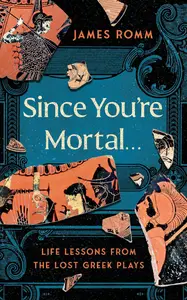
Since You're Mortal . . .: Life Lessons from the Lost Greek Plays by James Romm
English | 5 May 2026 | ISBN: 1324086084 | 208 pages | PDF | 7.05 Mb
English | 5 May 2026 | ISBN: 1324086084 | 208 pages | PDF | 7.05 Mb
The Prince: Second Edition Audiobooks
Posted by Free butterfly at Oct. 4, 2026
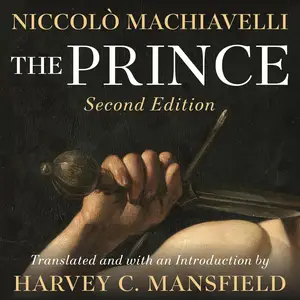
The Prince: Second Edition by Niccolò Machiavelli
English | June 10, 2026 | ASIN: B0H2JCB9FR | 3 hours and 52 minutes | M4B | 212.06 Mb
English | June 10, 2026 | ASIN: B0H2JCB9FR | 3 hours and 52 minutes | M4B | 212.06 Mb
Mahavishnu Orchestra - Birds of Fire (1973) [Remastered 1991] Music
Posted by Designol at Sept. 29, 2026

Mahavishnu Orchestra - Birds of Fire (1973) [Remastered 1991]
EAC | FLAC | Image (Cue&Log) ~ 247 Mb | Mp3 (CBR320) ~ 97 Mb | Scans included
Fusion, Jazz-Rock | Label: Columbia | # 468224 2, COL 468224 2 | Time: 00:40:16
EAC | FLAC | Image (Cue&Log) ~ 247 Mb | Mp3 (CBR320) ~ 97 Mb | Scans included
Fusion, Jazz-Rock | Label: Columbia | # 468224 2, COL 468224 2 | Time: 00:40:16
Emboldened by the popularity of Inner Mounting Flame among rock audiences, the first Mahavishnu Orchestra set out to further define and refine its blistering jazz-rock direction in its second – and, no thanks to internal feuding, last – studio album. Although it has much of the screaming rock energy and sometimes exaggerated competitive frenzy of its predecessor, Birds of Fire is audibly more varied in texture, even more tightly organized, and thankfully more musical in content. A remarkable example of precisely choreographed, high-speed solo trading – with John McLaughlin, Jerry Goodman, and Jan Hammer all of one mind, supported by Billy Cobham's machine-gun drumming and Rick Laird's dancing bass – can be heard on the aptly named "One Word," and the title track is a defining moment of the group's nearly atonal fury. The band also takes time out for a brief bit of spaced-out electronic burbling and static called "Sapphire Bullets of Pure Love." Yet the most enticing pieces of music on the record are the gorgeous, almost pastoral opening and closing sections to "Open Country Joy," a relaxed, jocular bit of communal jamming that they ought to have pursued further.
Aapo Hakkinen - Domenico Scarlatti: 14 Sonatas (2026) [Official Digital Download 24/96] Vinyl & HR
Posted by delpotro at Sept. 25, 2026
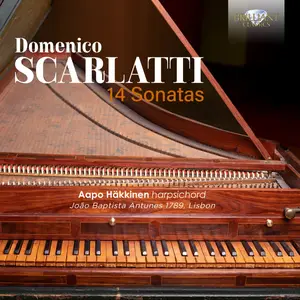
Aapo Hakkinen - Domenico Scarlatti: 14 Sonatas (2026)
FLAC (tracks) 24-bit/96 kHz | Front Cover | Time - 64:10 minutes | 1,32 GB
Classical | Label: Brilliant Classics, Official Digital Download
FLAC (tracks) 24-bit/96 kHz | Front Cover | Time - 64:10 minutes | 1,32 GB
Classical | Label: Brilliant Classics, Official Digital Download
Domenico, son of Alessandro Scarlatti, one of the great Italian composers, was born in Naples in 1685. In a letter addressed to Ferdinand de’ Medici, Alessandro says, “This son of mine is an eagle whose wings are grown; he ought not to stay idle in the nest, and I ought not to hinder his flight.”
VA - Soul On The Real Side 18 (2026) Music
Posted by ciklon5 at Sept. 10, 2026
VA - Soul On The Real Side 18 (2026)
FLAC (tracks), Lossless | 1:05:47 | 369 Mb
Genre: Soul, Funk, RnB
FLAC (tracks), Lossless | 1:05:47 | 369 Mb
Genre: Soul, Funk, RnB
The Real Side music project has released Volume 18 of its premium soul, Northern soul, and crossover soul compilation, curated from the Charly Records archives and independent labels. The release opens with the early track "Isn't She A Pretty Girl" by teenage artist Ronnie McNeir, followed by James "Bull" Parks's sought-after "Bygones," Eddie Bo's super-rare funk groove "Sun Won't Shine," and rhythmic tracks from Southside Movement. This top-tier collection bridges established soul classics like Ruby Andrews's "Just Loving You" with rare archival finds appearing on CD for the first time, including edits featuring a young Gwen Guthrie and the early roots of Cameo.