John+cage
John Cage - John Cage Shock, Vol. 1-3 (2012) 3CD Music
Posted by Designol at Sept. 15, 2024
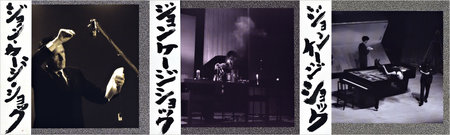
John Cage - John Cage Shock, Vol. 1-3 (2012) 3CD
EAC | FLAC | Tracks (Cue&Log) ~ 606 Mb | Mp3 (CBR320) ~ 341 Mb | Scans included
Label: EM/Edition Omega Point | # EM1104CD-EM1106CD, OP-0008~0010 | 02:01:54
Contemporary Classical, Avant-Garde, Experimental
EAC | FLAC | Tracks (Cue&Log) ~ 606 Mb | Mp3 (CBR320) ~ 341 Mb | Scans included
Label: EM/Edition Omega Point | # EM1104CD-EM1106CD, OP-0008~0010 | 02:01:54
Contemporary Classical, Avant-Garde, Experimental
In October 1962, John Cage and David Tudor went to Japan to present a series of historic concerts. Sensation. These are invaluable recordings, since they aren’t of a selected repertoire reconsidered in tranquility but capture the atmosphere of a time when all this was new and highly radical. And it’s a fine programme, played by the best exponents.
Nicholas Isherwood - Aria: Nicholas Isherwood Performs John Cage (2015) Music
Posted by Designol at June 17, 2023
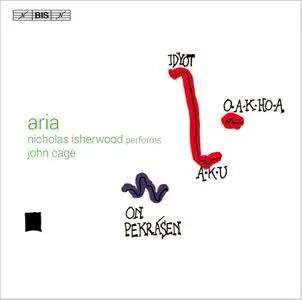
Nicholas Isherwood - Aria: Nicholas Isherwood Performs John Cage (2015)
EAC | FLAC | Image (Cue&Log) ~ 159 Mb | Mp3 (CBR320) ~ 104 Mb | Scans included
Classical, Avant-Garde, Vocal | Label: BIS | # BIS-SACD-2149 | Time: 00:44:53
EAC | FLAC | Image (Cue&Log) ~ 159 Mb | Mp3 (CBR320) ~ 104 Mb | Scans included
Classical, Avant-Garde, Vocal | Label: BIS | # BIS-SACD-2149 | Time: 00:44:53
Nicholas Isherwood made his début as Lucifer in Stockhausen’s Donnerstag aus Licht at Covent Garden, at the age of 25, and has since collaborated closely with composers such as George Crumb, Hans Werner Henze, György Kurtág and Iannis Xenakis. His relationship with John Cage soon developed into what he in his liner notes to the disc calls ‘a love affair’. The composer Sylvano Bussotti has remarked that ‘since the passing of Cathy Berberian, Nicholas Isherwood is the singer who best understands the spirit of the music of John Cage’. On ARIA, Isherwood presents most of Cage’s music for solo voice that is not included in the composer’s Song Books, and most pieces are here recorded for the first time by a male singer. The programme covers 43 years, from A Chant with Claps from the early 1940s to Ryoanji and Sonnekus2 of the 1980s, and includes the celebrated Aria, here performed with a new multi-channel tape realization of Cage’s Fontana Mix, by the Italian composer Gianluca Verlingieri.
Herbert Henck: John Cage - Early Piano Music (2005) Music
Posted by Designol at Nov. 6, 2022
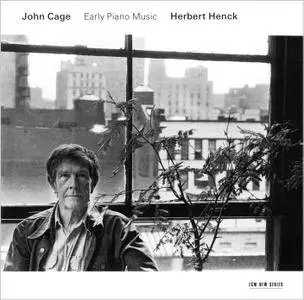
Herbert Henck: John Cage - Early Piano Music (2005)
EAC | FLAC | Image (Cue&Log) ~ 188 Mb | Mp3 (CBR320) ~ 184 Mb | Scans included | 01:09:20
Contemporary Classical, Minimalism | Label: ECM | # ECM New Series 1844, 476 1515
EAC | FLAC | Image (Cue&Log) ~ 188 Mb | Mp3 (CBR320) ~ 184 Mb | Scans included | 01:09:20
Contemporary Classical, Minimalism | Label: ECM | # ECM New Series 1844, 476 1515
John Cage: Early Piano Music comes from Herbert Henck, an experienced hand with the work of Cage, having previously recorded Music for Piano, Music of Changes, and Sonatas and Interludes in addition to a mighty swath of first-tier twentieth-century literature for piano for various labels, most notably Wergo and ECM New Series. These are early works for standard, not prepared, piano, and some of these pieces will be as familiar to dyed-in-the-wool Cageans as "Happy Birthday." This puts the pressure on Henck to excel, and he does so spectacularly well here. The disc includes the two sets entitled Two Pieces for Piano, the piano version of The Seasons, Metamorphosis, In a Landscape, Ophelia, and the fragmentary Quest. The pieces date from 1935 to 1948, the same range covered by pianist Jeanne Kirstein in her pioneering 1967 survey of Cage's piano music for CBS Masterworks.
Bruce Brubaker - Glass Cage: Music for piano by Philip Glass and John Cage (2000) Music
Posted by Designol at Sept. 4, 2024
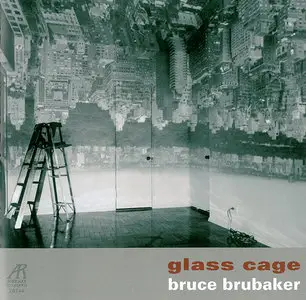
Bruce Brubaker - Glass Cage: Music for piano by Philip Glass and John Cage (2000)
EAC | FLAC | Image (Cue&Log) ~ 197 Mb | Mp3 (CBR320) ~ 145 Mb | Scans ~ 45 Mb
Classical, Minimalism | Label: Arabesque | # Z6744 | Time: 01:03:35
EAC | FLAC | Image (Cue&Log) ~ 197 Mb | Mp3 (CBR320) ~ 145 Mb | Scans ~ 45 Mb
Classical, Minimalism | Label: Arabesque | # Z6744 | Time: 01:03:35
Though he may not be a piano superstar, Bruce Brubaker is clearly a musician to watch. On this recording of solo piano works by Philip Glass and John Cage, Brubaker somehow shifts between these two very different modernist composers to create a seamless disc of mesmerizing keyboard music. While Glass's own playing is often precise and austere, Brubaker is a different beast altogether. With him, we get a hint of Impressionism and a sense of contemplation with each note. The five parts of Metamorphosis are given shades of melancholy, along with frenzy; on the expansive "Mad Rush," Brubaker goes wild where he has to, but always returns to the piece's calming, sweet center. The piano music of John Cage is limited to just two cuts–"A Room" and "Dream"–but they, too, are hauntingly beautiful (especially the latter, longer piece).
Katrin Zenz - John Cage: Complete Works for Flute, Vol. 1 (2015) Music
Posted by Designol at Feb. 3, 2022
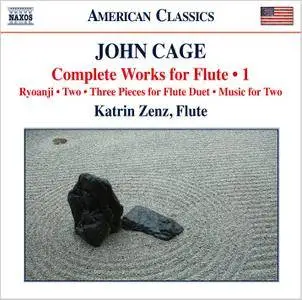
Katrin Zenz - John Cage: Ryoanji; Two; Three Pieces for Flute Duet; Music for Two (2015)
EAC | FLAC | Image (Cue&Log) ~ 229 Mb | Mp3 (CBR320) ~ 158 Mb | Scans included
Classical, Contemporary, Avant-Garde | Label: Naxos | # 8.559773 | Time: 01:02:50
EAC | FLAC | Image (Cue&Log) ~ 229 Mb | Mp3 (CBR320) ~ 158 Mb | Scans included
Classical, Contemporary, Avant-Garde | Label: Naxos | # 8.559773 | Time: 01:02:50
This first volume of John Cage’s complete works for flute spans a fifty year period, from the Three Pieces for Flute Duet of 1935—deft studies in chromatic writing—to the 1984 Ryoanji, which involves the use of pre-recorded flutes and percussion with resultant diverse and intricate textures. Two is the first of Cage’s important ‘number’ series and is edgily ruminative, while Music for Two, written for any combination of the 17 different instrumental ‘parts without scores’ provided by the composer, is heard in an arrangement described by Katrin Zenz as a ‘new piece for flute and piano’.
Margaret Leng Tan, American Composers Orchestra, Dennis Russell Davies - John Cage: The Seasons, etc (2000) Music
Posted by Designol at Jan. 5, 2025
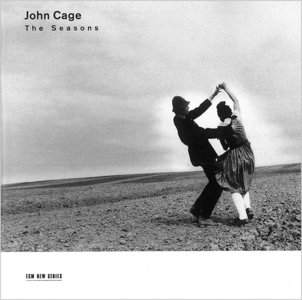
John Cage - The Seasons (2000)
Margaret Leng Tan, prepered piano, toy piano;
American Composers Orchestra; Dennis Russell Davies, conductor
EAC | FLAC | Image (Cue&Log) ~ 252 Mb | Mp3 (CBR320) ~ 174 Mb | Scans ~ 48 Mb
Classical, Avant-Garde | Label: ECM Records | # 465 140-2 | Time: 01:15:59
Margaret Leng Tan, prepered piano, toy piano;
American Composers Orchestra; Dennis Russell Davies, conductor
EAC | FLAC | Image (Cue&Log) ~ 252 Mb | Mp3 (CBR320) ~ 174 Mb | Scans ~ 48 Mb
Classical, Avant-Garde | Label: ECM Records | # 465 140-2 | Time: 01:15:59
This is an enchanting CD, every item a sheer delight. Margaret Leng Tan worked with Cage in the last decade of his life and her earlier recordings (1/92; 7/95) show a special sympathy for the magical world of Cage's keyboard music. The second of her New Albion CDs included the piano solo version of The Seasons, and Cage was honest enough to admit to her that he had help from Virgil Thomson and Lou Harrison in making the orchestral version recorded here. The result is recognisably Cage at his most poetic, evoking each of the four seasons in lovely changing colours. There are two realisations of one of the last of what are called Cage's 'Number Pieces', Seventy-Four, written specially for the American Composers Orchestra a few months before his death in 1992. Several hearings have confirmed for me that this seamless garment of sustained sound in two overlapping parts is an immensely moving document from a unique human being at the very end of his life.
John Cage - Piano Concerto; Credo in Us; Imaginary Landscape No.1; Rozart Mix; Music for Carillon (2008) Music
Posted by Designol at June 27, 2023
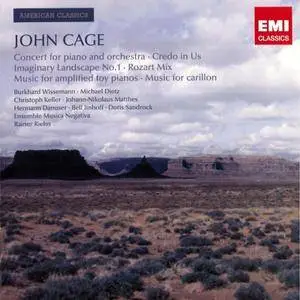
John Cage: Piano Concerto; Credo in Us; Imaginary Landscape No.1; Rozart Mix; Music for Carillon (2008)
Burkhard Wissemann, Michael Dietz; Johann-Nikolaus Matthes; Bell Imhoff, Doris Sandrock
Christoph Keller; Hermann Danuser, Ensemble Musica Negativa, Rainer Riehn
EAC | FLAC | Image (Cue&Log) ~ 352 Mb | Mp3 (CBR320) ~ 166 Mb | Scans included
Classical, Avant-Garde, Electronic | Label: EMI | # 50999 2 34454 2 0 | Time: 01:11:15
Burkhard Wissemann, Michael Dietz; Johann-Nikolaus Matthes; Bell Imhoff, Doris Sandrock
Christoph Keller; Hermann Danuser, Ensemble Musica Negativa, Rainer Riehn
EAC | FLAC | Image (Cue&Log) ~ 352 Mb | Mp3 (CBR320) ~ 166 Mb | Scans included
Classical, Avant-Garde, Electronic | Label: EMI | # 50999 2 34454 2 0 | Time: 01:11:15
John Cage (1912-1992) was one of the most controversial composers of the 20th century. He is best known for his 1952 work 4'33" which involves not a single note of music being played. This selection of Cage's music provides a rare opportunity to get to know a range of works that were written between the years 1939-65, which were some of the composer's most productive years.
Alberto Rosado - Musica Ricercata: Gyorgy Ligeti, Olivier Messiaen, Toru Takemitsu, John Cage (2001) Music
Posted by Designol at Jan. 15, 2024
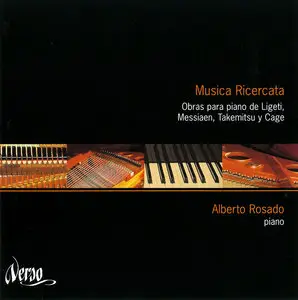
Alberto Rosado - Musica Ricercata (2001)
works by György Ligeti, Olivier Messiaen, Toru Takemitsu, John Cage
EAC | FLAC | Image (Cue&Log) ~ 261 Mb | Mp3 (CBR320) ~ 219 Mb | Scans included
Genre: Classical | Label: Verso | # VRS 2006 | Time: 01:17:06
works by György Ligeti, Olivier Messiaen, Toru Takemitsu, John Cage
EAC | FLAC | Image (Cue&Log) ~ 261 Mb | Mp3 (CBR320) ~ 219 Mb | Scans included
Genre: Classical | Label: Verso | # VRS 2006 | Time: 01:17:06
Alberto Rosado showcases some of the most significant modern composers in this well-considered programme. Inevitably he’s up against fierce competition, not least Pierre-Laurent Aimard’s recordings of both Ligeti’s Ricercata (included on the disc which received Gramophone’s Contemporary Award in 1997) and the complete Vingt Regards.
Louth Contemporary Music Society - A Place Between: Tavener, Part, Silvestrov, Knaifel, Gorecki, Cage (2009) Music
Posted by Designol at June 25, 2022
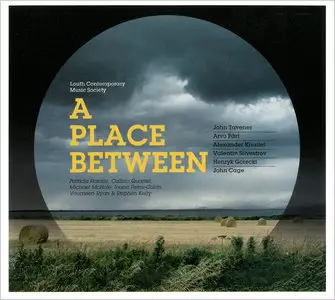
Louth Contemporary Music Society - A Place Between (2009)
John Tavener · Arvo Pärt · Valentin Silvestrov · Alexander Knaifel · Henryk Górecki · John Cage
EAC | FLAC | Image (Cue&Log) ~ 251 Mb | Mp3 (CBR320) ~ 184 Mb | Scans included
Label: Louth Contemporary Music LTD | # LCM5901 | Time: 01:04:36
Classical, Contemporary, Spiritual Minimalism
John Tavener · Arvo Pärt · Valentin Silvestrov · Alexander Knaifel · Henryk Górecki · John Cage
EAC | FLAC | Image (Cue&Log) ~ 251 Mb | Mp3 (CBR320) ~ 184 Mb | Scans included
Label: Louth Contemporary Music LTD | # LCM5901 | Time: 01:04:36
Classical, Contemporary, Spiritual Minimalism
World première recordings of works by John Tavener, Arvo Pärt, Valentin Silvestrov and Alexander Knaifel sit alongside pieces by Henryk Górecki and John Cage on the first recording from a new Irish label operated by noted concert promoters Louth Contemporary Music Society (LCMS). All of these very popular contemporary composers have in various ways been deeply influenced by profound spiritual, religious or cultural encounters, and the disc celebrates them in a moving, magical programme. A Place Between intersperses - to wonderful effect - beautiful works for string quartet (Silvestrov's meditative Ikon, Tavener's deeply moving Ikon of Joy/Sorrow, Pärt's reflective Da Pacem Domine) with two solo piano works (Pärt's uplifting Hymn to a Great City, and Cage’s melodic and expressive In a Landscape). Górecki's memorial for Michael Vyner, Good Night and Knaifel’s mystical O Heavenly King both feature the haunting voice of soprano Patricia Rozario. Silvestrov's 25.X.1893 lullaby is a melancholic and lyrical piece for violin and piano.
Jeroen van Veen - Minimal Piano Collection, Volumes I-IX (2006) 9CD Box Set Music
Posted by Designol at Feb. 9, 2024
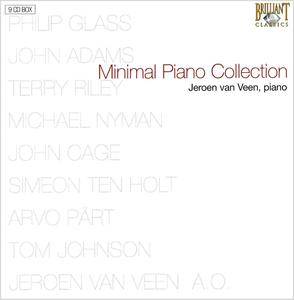
Jeroen van Veen - Minimal Piano Collection, Volumes I-IX (2006) 9CD Box Set
Philip Glass - Michael Nyman - John Adams - Terry Riley - Arvo Pärt - John Cage
Friedrich Nietzsche - Erik Satie - Tom Johnson - Wim Mertens - Jacob ter Veldhuis
Yann Tiersen - Klaas de Vries - Simeon ten Holt - John Borstlap - Carlos Micháns
EAC | FLAC | Image (Cue&Log) ~ 2 Gb | Scans ~ 63 Mb | Time: 10:15:53
Classical, Minimalism, Contemporary | Label: Brilliant Classics | # 8551
Philip Glass - Michael Nyman - John Adams - Terry Riley - Arvo Pärt - John Cage
Friedrich Nietzsche - Erik Satie - Tom Johnson - Wim Mertens - Jacob ter Veldhuis
Yann Tiersen - Klaas de Vries - Simeon ten Holt - John Borstlap - Carlos Micháns
EAC | FLAC | Image (Cue&Log) ~ 2 Gb | Scans ~ 63 Mb | Time: 10:15:53
Classical, Minimalism, Contemporary | Label: Brilliant Classics | # 8551
There's perhaps a touch of irony in the title of Dutch pianist and composer Jeroen van Veen's box set Minimal Piano Collection because at nine discs, it's a pretty massive collection. The program booklet notes that he recorded the entire set, which includes more than ten hours of music, in only six days, an astounding feat. In the program notes, van Veen offers a remarkably clear and concise history of minimalism in music. He defines it broadly enough (following the lead of composer and critic Tom Johnson) to include works by Friedrich Nietzsche and Satie. Philip Glass is the composer most widely represented, with three of the set's nine CDs devoted to his music originally for piano, as well as transcriptions from his film scores and operas. Two discs are given to van Veen's mammoth 24 Préludes, organized according to the framework of Bach's Well-Tempered Clavier. Other composers range from the very well known, such as Michael Nyman, John Adams, Terry Riley, Arvo Pärt, and John Cage, to the familiar-to-specialists, like Tom Johnson, Wim Mertens, and Jacob ter Veldhuis, to those little-known to American audiences, like Klaas de Vries, Simeon ten Holt, John Borstlap, Yann Tiersen, and Carlos Micháns.