Denon
Tôsha Suihô - Die vier Jahreszeiten in Kyoto (Denon, TIS # 68.30075) [3xCD, RE-UP] Music
Posted by luckburz at May 28, 2016
![Tôsha Suihô - Die vier Jahreszeiten in Kyoto (Denon, TIS # 68.30075) [3xCD, RE-UP]](https://pixhost.icu/avaxhome/bf/6a/00296abf_medium.jpeg)
Tôsha Suihô - Die vier Jahreszeiten in Kyoto (Auf der japanischen Flöte)
Tôsha Suihô - Four Seasons In Kyoto (on the japanese flute)
EAC+LOG+CUE | FLAC: 581 MB | Full Artwork | 5% Recovery Info
Label/Cat#: Denon, TIS # 68.30075 | Country/Year: Germany 1984
Genre: World & Folk | Style: Japanese Flute
The shakuhachi (尺八、しゃくはち) is a Japanese end-blown flute. It was originally introduced from China into Japan in the 8th century and underwent a resurgence in the early Edo Period. The shakuhachi is traditionally made of bamboo, but versions now exist in ABS and hardwoods. It was used by the monks of the Fuke school of Zen Buddhism in the practice of suizen (吹禅, blowing meditation). The instrument is normally tuned to the minor pentatonic scale…
Walter Davis, Jr. - Illumination (1977) {Denon--Nippon Columbia DC-8553 rel 1989} Music
Posted by ruskaval at March 14, 2021
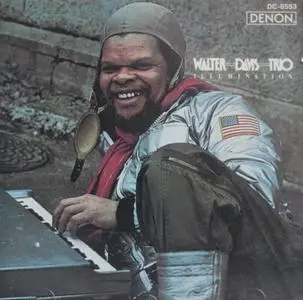
Walter Davis, Jr. - Illumination (1977) {Denon–Nippon Columbia DC-8553 rel 1989}
EAC rip (secure mode) | FLAC (tracks)+CUE+LOG -> 346 Mb | MP3 @320 -> 169 Mb
Full Artwork @ 300 dpi (jpg) -> 8 Mb | 5% repair rar
© 1977, 1989 Denon / Nippon Columbia | DC-8553
Jazz / Hard Bop / Piano
Since Walter Davis, Jr. had relatively few opportunities to lead recording dates of his own, one would hope that conditions would be ideal for the occasional recording session. Sadly, he's stuck with a badly out of tune instrument on this occasion, making it almost excruciating to listen to his performance of his best-known work, the normally exciting hard bop vehicle "Scorpio Rising." Davis utilizes several different rhythm sections, including the likes of Buster Williams, Art Blakey, and Tony Williams.
DENON Sonic Boom Demostration Test Disc (AC3) Music
Posted by ducnv at Nov. 6, 2008

DENON Sonic Boom Demostration Test Disc - AC3 5 channels
DVD Nero Image: 40 x 100Mb RS | Music only: 3 x 80Mb RS
DVD Nero Image: 40 x 100Mb RS | Music only: 3 x 80Mb RS
Chick Corea - Early Days (1969) {Denon DC-8541} Music
Posted by tiburon at June 11, 2011
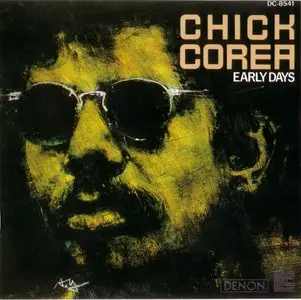
Chick Corea - Early Days (1969) {Denon DC-8541}
EAC 1.0b1 | FLAC tracks level 8 | Cue+Log+M3U+MD5 | Full Scans 600dpi | 385MB + 5% Recovery
Genre: Jazz
EAC 1.0b1 | FLAC tracks level 8 | Cue+Log+M3U+MD5 | Full Scans 600dpi | 385MB + 5% Recovery
Genre: Jazz
A key figure in the development of jazz's new direction in the late '60s and '70s , Chick Corea has since become one of the most influential musicians of the genre. The tracks on EARLY DAYS were recorded in 1969. Around the same time, the Davis Quintet was recording the epochal IN A SILENT WAY and BITCHES BREW. The material here, featuring sidemen Woody Shaw, Jack De Johnette, and Bennie Maupin, explores similarly abstract rhythmic excursions that favor texture and atmosphere over conventional song structure.
Denon Audio Technical CD Music
Posted by avoros at Aug. 1, 2006
Denon Audio Technical CD
CD FULL RANGE ONLY | EXACT AUDIO COPY IMAGE (WAV+CUE) | 629 MB (123 MB RAR)
CD FULL RANGE ONLY | EXACT AUDIO COPY IMAGE (WAV+CUE) | 629 MB (123 MB RAR)
This is one of the most comprehensive of any of the test CD's. It can be used for anything from aligning tape head azimuth to speaker frequency range, testing noise levels of either your cd player or amplifier/receiver, etc.
Chick Corea - Early Days (1969) {Denon} [Re-Up] Music
Posted by tiburon at March 25, 2013
![Chick Corea - Early Days (1969) {Denon} [Re-Up]](https://pixhost.icu/avaxhome/6c/a5/0025a56c_medium.jpeg)
Chick Corea - Early Days (1969) {Denon}
EAC 1.0b1 | FLAC tracks level 8 | Cue+Log+M3U+MD5 | Full Scans 600dpi | 310MB + 5% Recovery
Genre: Jazz
EAC 1.0b1 | FLAC tracks level 8 | Cue+Log+M3U+MD5 | Full Scans 600dpi | 310MB + 5% Recovery
Genre: Jazz
A key figure in the development of jazz's new direction in the late '60s and '70s (thanks in large part to his contributions to Miles Davis' pioneering fusion work), Chick Corea has since become one of the most influential musicians of the genre. The tracks on EARLY DAYS were recorded in 1969. Around the same time, the Davis Quintet was recording the epochal IN A SILENT WAY and BITCHES BREW. The material here, featuring sidemen Woody Shaw, Jack De Johnette, and Bennie Maupin, explores similarly abstract rhythmic excursions that favor texture and atmosphere over conventional song structure.
Ryuichi Sakamoto - Thousand Knives of Ryuichi Sakamoto (1978) [Denon/Nippon Columbia 35C38-7137, Japan] Music
Posted by v3122 at Dec. 21, 2018
![Ryuichi Sakamoto - Thousand Knives of Ryuichi Sakamoto (1978) [Denon/Nippon Columbia 35C38-7137, Japan]](https://pixhost.icu/avaxhome/23/7e/00607e23_medium.jpg)
Ryuichi Sakamoto - Thousand Knives of Ryuichi Sakamoto (1978)
XLD | Flac(Image) + Cue + Log & MP3 CBR 320Kbps
Denon/Nippon Columbia 35C38-7137 | ~ 262 or 108 Mb | Artwork(png) -> 27 Mb
Electronic, Experimental
XLD | Flac(Image) + Cue + Log & MP3 CBR 320Kbps
Denon/Nippon Columbia 35C38-7137 | ~ 262 or 108 Mb | Artwork(png) -> 27 Mb
Electronic, Experimental
Ryuichi Sakamoto's first solo album appeared before he formed Yellow Magic Orchestra in late 1978, after the young keyboardist had earned his M.A. in music from Tokyo University. Six long instrumentals make up this CD, but apart from a taste for Asian-sounding synth lines, they hint at very little of what was to come in YMO. "Thousand Knives" is a long disco-lite jazzy workout with a very un-synthesized guitar solo by Kazumi Watanabe (who would later join YMO on tour and have his solo album produced by Sakamoto)…
Archie Shepp / Dollar Brand - Duet (1990) {Denon} [Repost] Music
Posted by tiburon at Dec. 8, 2013
![Archie Shepp / Dollar Brand - Duet (1990) {Denon} [Repost]](https://pixhost.icu/avaxhome/f4/dd/0029ddf4_medium.jpeg)
Archie Shepp / Dollar Brand - Duet (1990) {Denon}
EAC 1.0b3 | FLAC tracks level 8 | Cue+Log+M3U | Full Scans 300dpi | 236MB + 5% Recovery
Genre: Jazz
EAC 1.0b3 | FLAC tracks level 8 | Cue+Log+M3U | Full Scans 300dpi | 236MB + 5% Recovery
Genre: Jazz
A somewhat surprising pairing at the time, the former firebrand of the tenor sax and the wonderful South African pianist found a pleasant and relaxed meeting point. By 1978, Shepp had largely abandoned the ferocious attack that gained him renown in the '60s, settling on a rich, Ben Webster-ish tone and playing a repertoire consisting of modern standards and bluesy originals.
Peter Erskine - Transition (1987) {Denon} Music
Posted by tiburon at Aug. 30, 2019

Peter Erskine - Transition (1987) {Denon}
EAC 0.99pb5 | FLAC Image | Cue+Log | Full Scans 300dpi | 367MB + 5% Recovery
MP3 CBR 320 Kbps | 153MB + 5% Recovery
Genre: Jazz, Fusion
EAC 0.99pb5 | FLAC Image | Cue+Log | Full Scans 300dpi | 367MB + 5% Recovery
MP3 CBR 320 Kbps | 153MB + 5% Recovery
Genre: Jazz, Fusion
This second solo album shows the versatility of Peter Erskine at its best: beautiful varied compositions (highlights being Corazon and King Richard II Suite) with an inspired cast of well-known musicians like Joe Lovano, Bob Mintzer, Marc Johnson and Kenny Werner. Moreover the masterful material is recorded with an unbelievable clarity of sound. One of, if not THE best solo effort of Peter Erskine and a recording that stands tall in the incredible discography of Peter Erskine.
Jeff Berlin - Crossroads (1998) {Denon} Music
Posted by tiburon at Feb. 9, 2020

Jeff Berlin - Crossroads (1998) {Denon}
EAC 0.99pb4 | FLAC tracks level 8 | Cue+Log+M3U | Full Scans 300dpi | 502MB + 5% Recovery
MP3 CBR 320 Kbps | 169MB + 5% Recovery
Genre: Fusion, Jazz-Rock
EAC 0.99pb4 | FLAC tracks level 8 | Cue+Log+M3U | Full Scans 300dpi | 502MB + 5% Recovery
MP3 CBR 320 Kbps | 169MB + 5% Recovery
Genre: Fusion, Jazz-Rock
To most listeners, Jeff Berlin is utterly unknown as a musician and composer; to progressive rock enthusiasts, however, Berlin is a god, ranked alongside Jaco Pastorious and Victor Wooten as one of the most exciting virtuoso bassists ever. Crossroads compiles his first two albums, Pump It! and Champion, into a single-disc "greatest hits" of sorts, although neither album had much impact beyond jazz-rock circles.